Peptide Purity & Quantitation Screening
Peptide Quality: Value Of Third-party Recognition
It is one reason appropriate peptide storage space and reconstitution methods issue. Partial peptide pieces can arise from insufficient synthesis or post-synthesis degradation. These pieces are typically smaller than the target peptide and may elute at different retention times.
A sample could produce a clean-looking chromatogram with one leading top and still be the incorrect compound if identity was never ever validated. HPLC measures splitting up and relative peak area; mass spectrometry steps mass-to-charge actions that can be made use of to confirm molecular identity. Peptide purity screening is the procedure of validating that a peptide example includes just the intended series-- and no significant impurities or by-products from synthesis. Due to the fact that peptides are created through complex chemical processes, trace impurities can form naturally. Evaluating permits researchers to comprehend exactly what's in the vial, confirming both identification and top quality. Choosing a trustworthy third-party lab is vital to obtaining reputable peptide recognition outcomes.
Mass Verification
- For experimental planning (like computing molar focus), both purity and net material serve numbers, yet pureness is what mirrors the chemical homogeneity of the peptide example.
- The injector presents an accurate volume of sample into the mobile-phase stream.
- However, for overall top quality evaluation or the characterization of peptides for a variety of applications, added logical examinations are advised.
The liquified peptide sample is injected right into a stream of liquid solvent (the mobile phase) that flows via a tube loaded with tiny fragments (the stationary phase). Different molecules "stick" to those particles with different staminas, so they travel with the column at different rates. Subtle distinctions in resources pureness and framework can result in disparities in Go to the website the task of the end product.
Can Hplc Spot Peptide Destruction?
Peptide pureness describes the quantity of the appropriate peptide in the peptide item. Nonetheless, for total top quality assessment or the characterization of peptides for a selection of applications, added analytical tests are advised. For instance, in order to make certain success in numerous peptide experiments, it may be essential to get rid of trifluoroacetic acid (TFA), or to examine the solubility of hydrophobic peptides prior to performing the called for experiments. During the detection, we utilize RP-HPLC combined with MS to identify the molecular weight of the peptide. The outright amount of the proper peptide in a sample is the product of the peptide material and the peptide purity. BOC Sciences has a top-tier peptide high quality screening platform, incorporating innovative Peptide Vendor analytical modern technologies and high-end instrumentation to provide accurate and effective peptide quality analysis services.
Begin Your Peptide Evaluation Job
Either can be acceptable, however third-party screening is the gold standard for research-grade materials. Recurring solvents, such as DMF, acetonitrile, or DMSO, are quantified making use of gas chromatography (GC) techniques. These solvents can impact peptide capability, so precise metrology is important to make sure pureness and stop contamination in experimental setups. Peptide security is assessed under various conditions to ensure integrity during study and product growth.
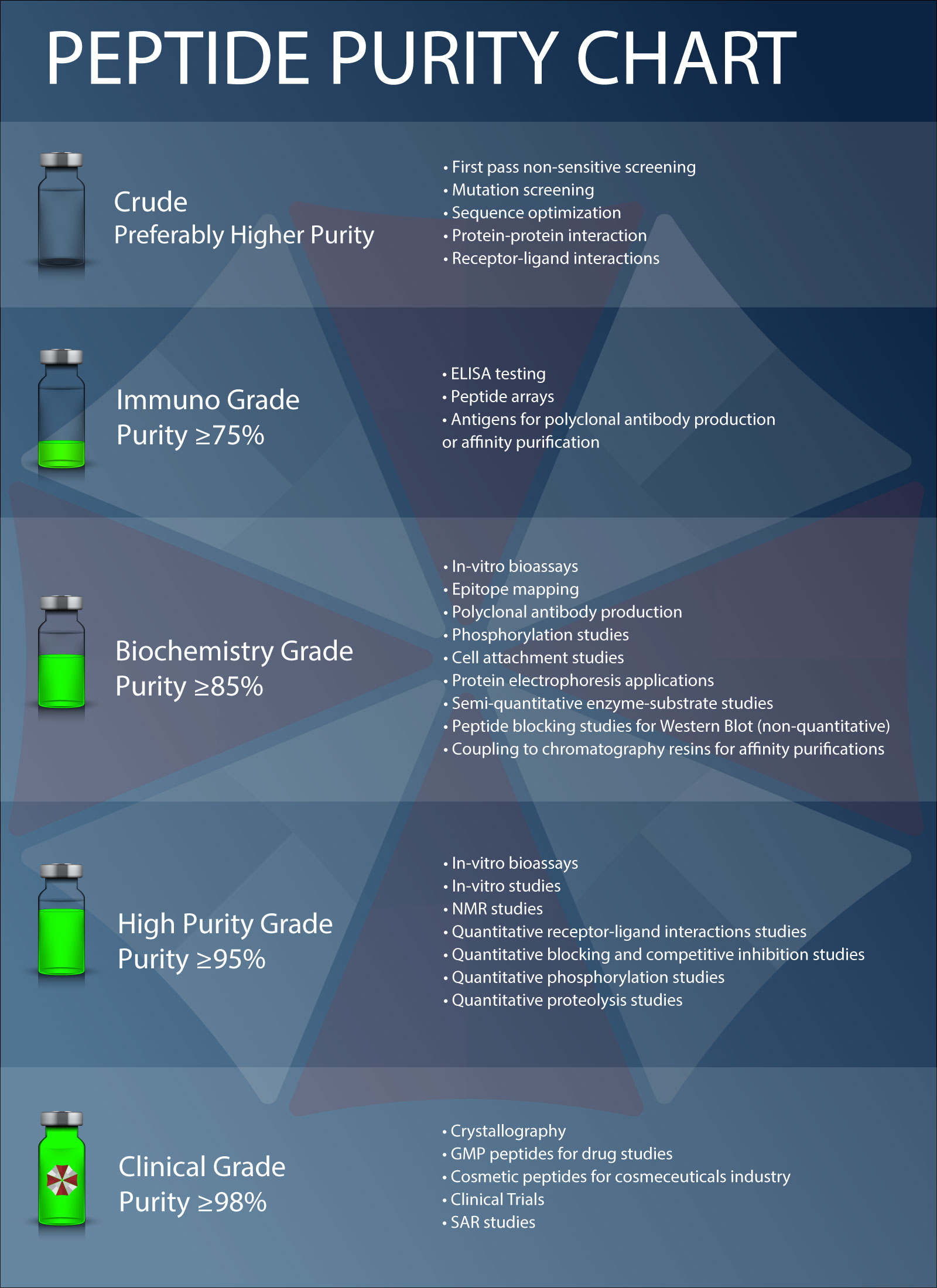
In addition to HPLC and MS, specialized laboratories might utilize orthogonal strategies for added precision. As an example, capillary electrophoresis can be made use of to divide very hydrophilic peptides or to confirm results, and MALDI-TOF mass spectrometry can assist in mapping bigger or modified peptides. Several peptide manufacturers or distributors will provide a COA (Certificate of Analysis), as an example our bpc 157 tb 500 mix, that includes the purity portion by HPLC and identity confirmation by MS for every batch. Top-tier laboratories often report peptide purity well above 95%, frequently ≥ 98-99%, by utilizing cutting edge HPLC and MS evaluations. They additionally evaluate both basic materials and completed peptide vials, which assists capture any type of pollutants, destruction items, or solution variances. Reputable peptide testing laboratories will certainly supply a suite of modern-day analytical methods-- HPLC combined with MS is a must, and schedule of additional approaches like capillary electrophoresis or amino acid analysis is a benefit. Beware of laboratories that do not use mass spectrometry along with HPLC, as this could miss out on crucial identity information. In a similar way, prevent laboratories that can not show confirmed analytical techniques. In accordance with ICH guidelines, verified approaches mean the lab has established the test's accuracy, precision, discovery limits, etc, guaranteeing the information you get are trustworthy.